

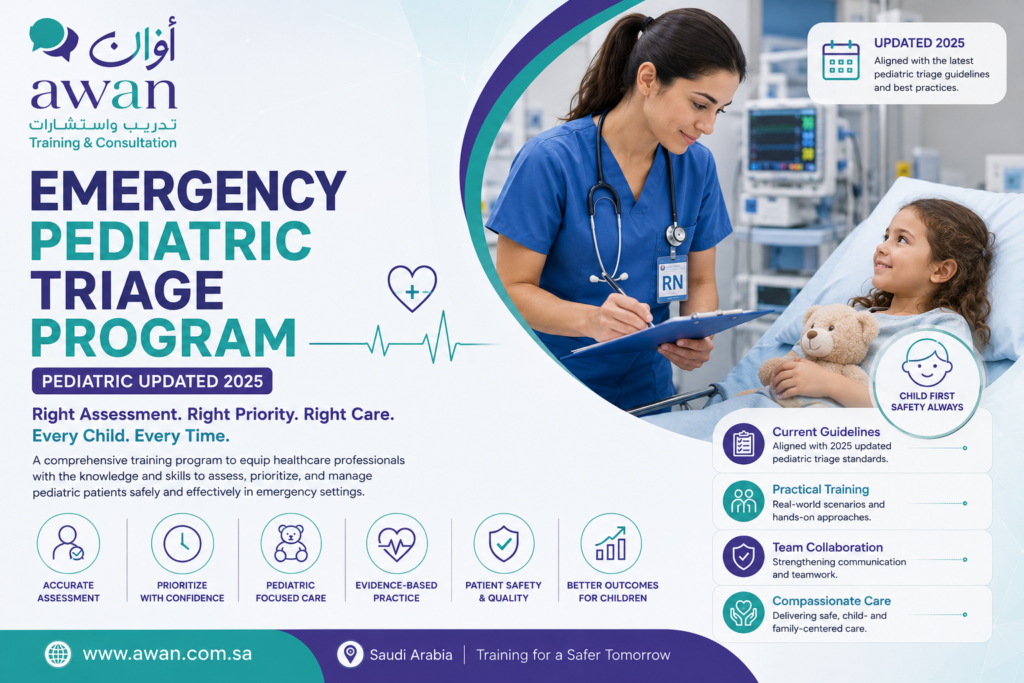
Emergency Pediatric Triage Program (EPTP) is essential to be conducted in Emergency Departments, where many pediatric patients may present simultaneously with different problems, some emergent. Triage aims to ensure that children are treated in the order of their clinical urgency and that their treatment is appropriate and timely. It also allows for allocation of the sick child to the most appropriate assessment and treatment area and contributes information that helps to describe the departmental patients’ flow. Children are triaged according to different categories related to their conditions within the triage guidelines for safety purposes. Effective collaborative teamwork within the staff in triage will assist their process.
This program is designed to introduce a unified comprehensive approach for pediatric triage at the Emergency Department and is based on a critical thinking approach.
Mr. Saleem Diknash
• Lecture/Discussion
• Group/Discussion
• Scenarios / Case Presentations
• Small Group Activities
• Role Play
• Demonstration
• Immediate Feedback
• Progress Test (Pre / Post – Test) – 80% success percentage.
• Clinical Practice Checklist – Oral Examination (Workplace Violence) – Competent Level
• Reaction Forms (Participants & Facilitators)
Want to receive push notifications for all major on-site activities?